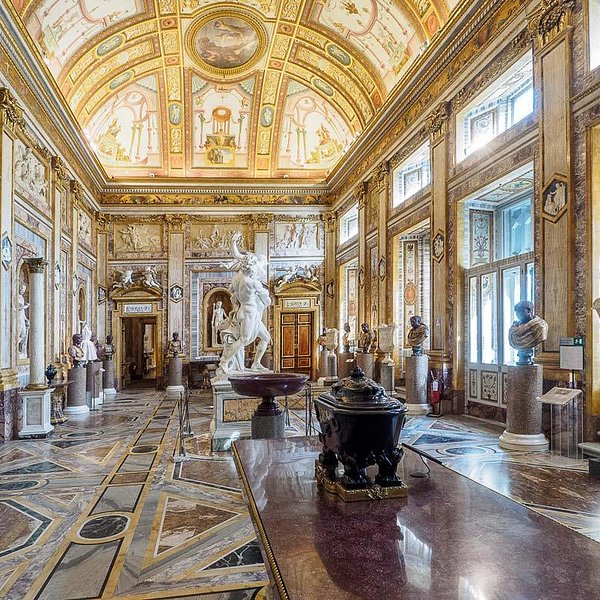
The Galleria Borghese in Rome is one of Italy’s most celebrated art museums. Located inside the beautiful Villa Borghese gardens, the gallery combines an elegant historic residence with an exceptional collection of Renaissance, Baroque, and classical art. Its intimate rooms allow visitors to experience major masterpieces in a setting that still reflects the taste and ambition of the Borghese family.
Unlike larger museums, Galleria Borghese offers a more focused experience. Visitors move through richly decorated halls filled with sculptures, paintings, mosaics, frescoes, and archaeological works. The collection includes famous creations by Gian Lorenzo Bernini, Caravaggio, Raphael, Titian, and Antonio Canova.
The History of Galleria Borghese
The museum is housed in a seventeenth-century villa originally connected to Cardinal Scipione Borghese. He was a passionate art collector and an important patron of several artists, particularly Bernini and Caravaggio. The cardinal assembled paintings, ancient sculptures, and newly commissioned works to demonstrate the cultural influence of the Borghese family.
The villa was designed not simply as a private residence, but as a place where architecture, decoration, nature, and art could be enjoyed together. This relationship remains one of the museum’s strongest attractions. Visitors do not see the artworks inside a neutral modern building. Instead, they encounter them within ornate rooms that form part of the historical experience.
Famous Masterpieces to See
The Galleria Borghese in Rome is especially known for its collection of Bernini sculptures. One of the most admired works is Apollo and Daphne, which captures the dramatic moment when Daphne transforms into a laurel tree. The extraordinary detail in the marble leaves, fingers, hair, and movement demonstrates Bernini’s technical brilliance.
Another major sculpture is The Rape of Proserpina. The work is famous for its emotional intensity and the realistic appearance of fingers pressing into marble skin. Bernini’s David is also an important highlight because it presents the biblical hero in motion rather than in a calm, static pose.
Caravaggio is represented by several important paintings. His works are recognised for their realism, strong contrasts between light and darkness, and dramatic emotional atmosphere. The museum’s collection also features paintings associated with Raphael and Titian, giving visitors a broader view of Italian artistic development.
Why Galleria Borghese Is Unique
One reason the gallery feels special is its relatively compact size. Instead of spending an entire day moving through endless galleries, visitors can concentrate on a carefully selected collection. The museum preserves the feeling of a private aristocratic collection, where individual works are connected to the decoration and proportions of each room.
Its location inside Villa Borghese also improves the experience. After visiting the museum, travellers can walk through one of Rome’s best-known green spaces. The combination of art, architecture, gardens, and history makes the area suitable for both first-time visitors and experienced art enthusiasts.
Tickets and Visiting Rules
Advance planning is important when visiting Galleria Borghese. Entry is organised through scheduled time slots, and the standard museum visit lasts approximately two hours. The official ticket information states that a limited number of visitors may enter during each shift. Therefore, reservations are strongly recommended, especially during weekends and peak tourism seasons.
The gallery is located at:
Piazzale Scipione Borghese, 5
00197 Rome, Italy
Visitors should arrive before their scheduled entrance time and follow the museum’s current rules regarding bags, photography, and security checks. Opening schedules, exhibitions, and ticket conditions can change, so travellers should verify the latest details through the official museum website before arriving.
The Best Time to Visit
Morning admission can provide a calm start to the day, while afternoon visits allow travellers to explore Villa Borghese before entering the museum. Weekdays are generally preferable for visitors who want to avoid the busiest periods.
Since admission is controlled, the museum rarely feels as crowded as major attractions with unrestricted entry. However, popular dates can sell out. Booking early remains the safest option.
Final Thoughts
The Galleria Borghese in Rome is more than a museum filled with famous names. It is a complete artistic environment where sculpture, painting, architecture, and landscape work together. Bernini’s energetic marble figures, Caravaggio’s dramatic paintings, and the villa’s decorated interiors create one of Rome’s most memorable cultural experiences.
For travellers interested in Italian art, Baroque history, or refined museum spaces, Galleria Borghese deserves a prominent place on a Rome itinerary. Its limited admission system also encourages visitors to slow down, study the details, and appreciate every room without rushing.