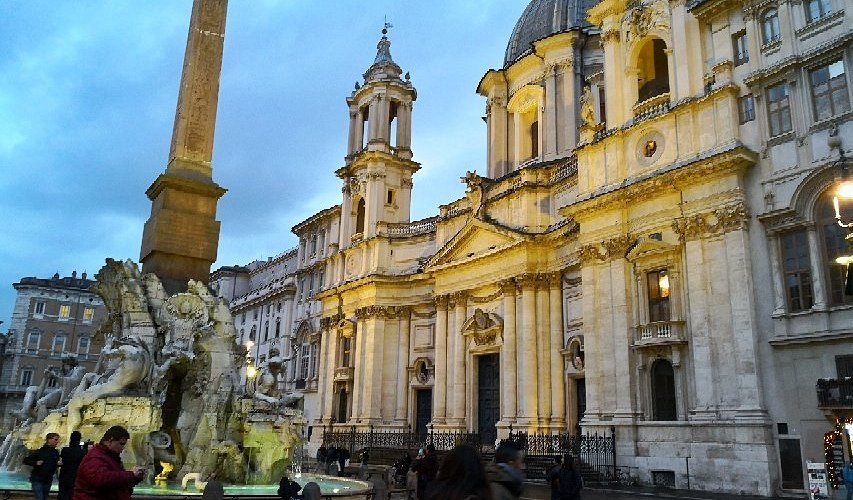
Piazza Navona in Rome is one of the most impressive public squares in Italy. Located in the historic centre of the capital, it is famous for its Baroque architecture, monumental fountains, elegant buildings, street performers, cafés, and lively atmosphere. The square is also an excellent example of how ancient Roman structures were transformed into important urban spaces.
Although Piazza Navona is best known for its seventeenth-century appearance, its distinctive elongated shape comes from the Stadium of Domitian. Emperor Domitian built the stadium around AD 86 for athletic competitions and public spectacles. The modern square follows the original perimeter of that ancient arena.
The Ancient History of Piazza Navona
The site originally served as a Roman stadium rather than a traditional marketplace. Thousands of spectators gathered there to watch athletic contests known as agones. Over time, the pronunciation and use of the area changed, eventually contributing to the modern name “Navona.”
Parts of the Stadium of Domitian remain beneath the present street level. Archaeological sections can be found approximately 4.5 metres below the modern square, offering evidence of its Roman origins.
During the Middle Ages, buildings gradually occupied the former stadium’s seating areas. The central arena remained open and developed into a public meeting place. By the seventeenth century, the square had become an important showcase for papal Rome and Baroque design.
The Fountain of the Four Rivers
The most famous monument in Piazza Navona in Rome is the Fountain of the Four Rivers, known in Italian as the Fontana dei Quattro Fiumi. Gian Lorenzo Bernini designed the fountain during the seventeenth century, and it remains one of the great masterpieces of Baroque sculpture.
The fountain represents four major rivers associated with different continents known to Europeans at the time. These are traditionally identified as the Nile, Danube, Ganges, and Río de la Plata. Large sculpted figures surround rocks, plants, animals, and an ancient Egyptian obelisk.
The monument was commissioned in connection with the Jubilee of 1650. Its dramatic forms, flowing water, and theatrical arrangement reflect Bernini’s ability to unite sculpture, architecture, and urban space.
The Other Fountains in Piazza Navona
Piazza Navona contains three major fountains. In addition to Bernini’s central masterpiece, visitors can see the Fountain of Neptune at the northern end and the Fountain of the Moor at the southern end.
The Fountain of the Moor features a central figure surrounded by marine creatures. The Fountain of Neptune includes dramatic sculptures connected to the sea. Together, the three fountains create a strong visual rhythm along the length of the square.
Because the monuments are positioned in an open public space, visitors can admire them from different angles throughout the day.
Sant’Agnese in Agone
Another important landmark is the Church of Sant’Agnese in Agone. Its curved façade, towers, and large dome dominate one side of the square. The church is closely associated with the Baroque transformation of Piazza Navona and contributes to its highly theatrical appearance.
According to Christian tradition, the church stands near the place where Saint Agnes suffered martyrdom. Its interior contains elaborate marble decoration, sculptures, chapels, and a richly designed dome.
Next to the church stands Palazzo Pamphilj, which reflects the historical influence of the Pamphilj family in the development of the square.
The Atmosphere Around Piazza Navona
Today, Piazza Navona in Rome is a popular meeting point for local residents and international travellers. The surrounding area contains restaurants, cafés, small shops, museums, churches, and historic streets.
Street artists and performers often contribute to the square’s energetic character. Visitors may encounter portrait painters, musicians, photographers, and guided walking groups. Official tourism information describes the area as one of the favourite meeting places for both Romans and tourists because of its welcoming and lively atmosphere.
During the winter holiday season, Piazza Navona has traditionally hosted a market connected to the Epiphany celebration. The event attracts families with decorations, sweets, toys, and seasonal stalls, although the exact arrangements may vary each year.
What to See Near Piazza Navona
The square is located within Rome’s historic centre, making it easy to combine with several nearby attractions. The Pantheon, Campo de’ Fiori, Palazzo Altemps, and the streets around Via Giulia are within walking distance.
The wider Pantheon, Navona, and Campo de’ Fiori district is considered one of the liveliest and most authentic parts of central Rome. It brings together archaeology, churches, historic palaces, traditional shops, and modern hospitality venues.
Palazzo Braschi, located beside the square, houses the Museum of Rome. Its collections help visitors understand the city’s social, artistic, and architectural development.
Best Time to Visit Piazza Navona
Early morning is ideal for travellers who want to photograph the fountains with fewer people. The soft light also highlights the façades and sculptural details.
Late afternoon and evening offer a different experience. Buildings become illuminated, cafés become busier, and the square develops a more social atmosphere. Sunset is particularly attractive because the warm light reflects on the fountains and surrounding architecture.
Piazza Navona is an open public square, so visitors can walk through it without purchasing an entrance ticket. However, nearby churches, museums, archaeological areas, and special exhibitions may operate their own schedules and admission systems.
Useful Visiting Tips
Wear comfortable shoes because the surrounding historic centre is best explored on foot. Keep personal belongings secure during crowded periods, especially around performances and busy restaurant areas.
Visitors should also allow enough time to examine the fountains closely. Many sculptural details, animals, plants, and symbolic figures are easy to miss during a quick walk across the square.
Restaurants directly facing Piazza Navona provide an attractive setting, although prices may be higher than those found in nearby side streets. Travellers seeking a quieter meal can explore the smaller lanes surrounding the square.
Why Piazza Navona Is Worth Visiting
Piazza Navona in Rome combines ancient history, Baroque art, religious architecture, and modern city life in one remarkable location. Its shape preserves the memory of the Stadium of Domitian, while its fountains and churches reflect the artistic ambition of seventeenth-century Rome.
The square is more than a place to take photographs. It shows how Rome continuously adapted ancient spaces for new generations. Visitors can experience archaeology, sculpture, architecture, dining, and everyday urban life without leaving the same historic setting.
For anyone exploring the Italian capital, Piazza Navona deserves a central place on the itinerary.