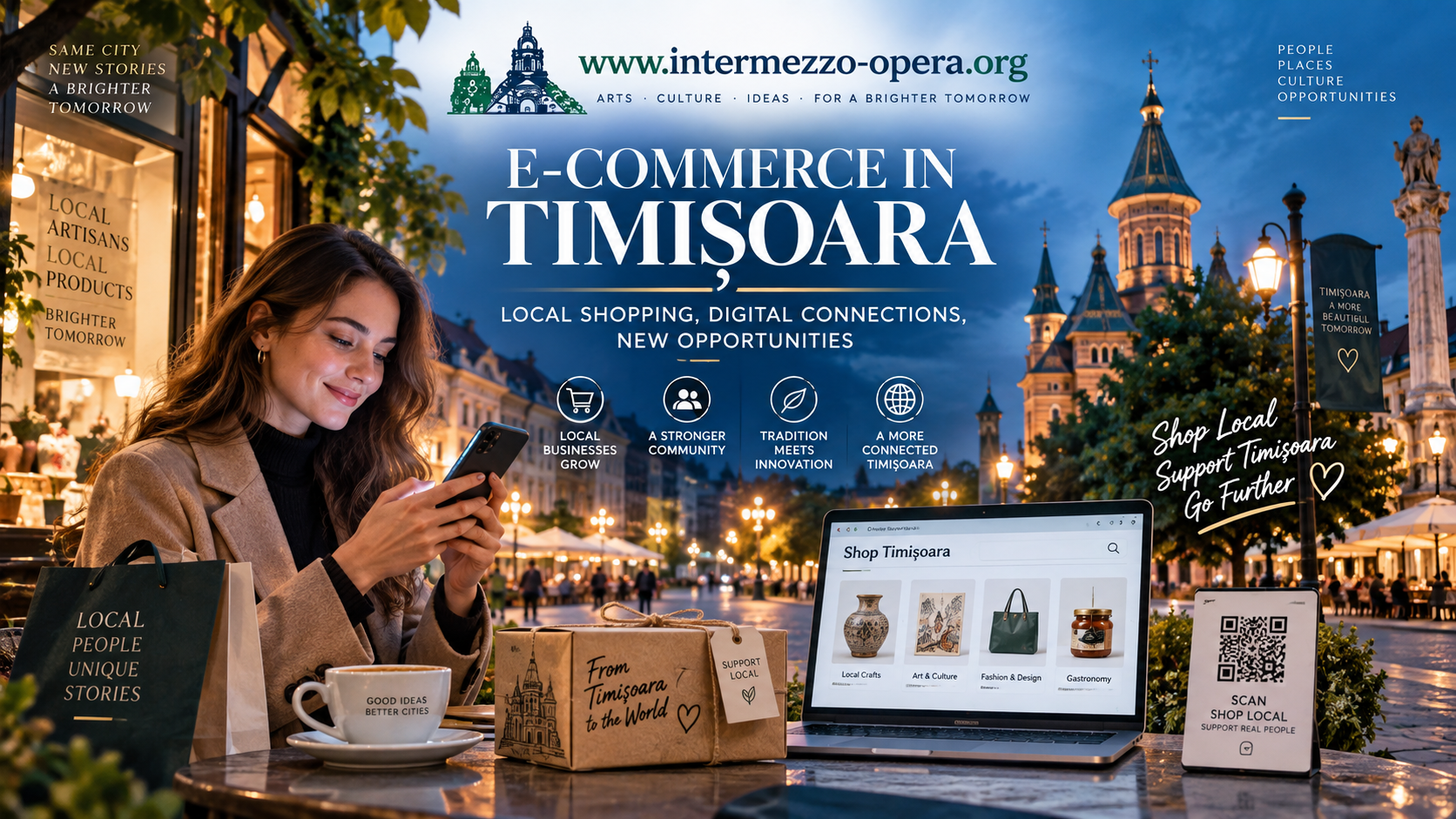
E-commerce continues to change how people discover, compare, and purchase products. In Romania, online shopping has become an important part of everyday consumer behavior, supported by wider internet access, digital payments, and improving delivery networks.
For Timișoara, this trend creates an interesting connection between technology, retail, tourism, and local businesses.
Online Shopping Becomes Part of Daily Life
Romanian consumers increasingly use online platforms because they offer convenience and a wide range of products. Clothing, electronics, cosmetics, and household goods remain among the common categories purchased online.
Mobile shopping also continues to grow. Consumers can now compare prices, read product information, and complete purchases directly from their smartphones.
As a result, local businesses in Timișoara can reach customers beyond their physical stores.
Timișoara Has a Strong Retail Environment
Timișoara already has a developed retail scene. The city’s tourism information highlights major shopping destinations, including Iulius Town and Shopping City Timișoara. Iulius Town alone offers hundreds of stores alongside restaurants and entertainment facilities.
However, e-commerce adds another layer to this retail ecosystem.
A customer can discover a local brand online before visiting the city. Likewise, visitors can find products or services through digital channels before arriving in Timișoara.
Local Products Can Reach Wider Markets
E-commerce also creates opportunities for local producers, designers, and artisans.
Timișoara and the wider Timiș region have a strong cultural and creative identity. Local tourism organizations promote crafts, traditions, gastronomy, and regional products as part of the destination experience.
Therefore, online stores can help transform local products into digital products with a much wider reach.
A customer from another Romanian city, for example, can discover a local product without physically visiting Timișoara.
Tourism and E-Commerce Can Work Together
The connection between tourism and online commerce is becoming increasingly relevant.
Visitors often search online for restaurants, attractions, events, accommodation, and shopping opportunities before travelling. Digital tourism platforms can bring these services together in one place. The City of Timișoara also highlights digital platforms, mobile applications, interactive maps, and QR codes as tools for improving the tourist experience.
Meanwhile, the city’s official souvenir store currently offers hundreds of items connected with Timișoara, although its official Souvenir Station is currently a physical-only shop rather than an online store.
This illustrates an opportunity for local tourism businesses to explore stronger connections between physical experiences and digital commerce.
Delivery Infrastructure Supports E-Commerce
Fast delivery has become another important part of online shopping.
Romania has continued developing its logistics infrastructure, including delivery networks and parcel lockers. These improvements support e-commerce, particularly in larger urban areas.
For businesses in Timișoara, efficient delivery can make online sales easier to manage. Customers can also choose between home delivery and alternative collection points.
What Comes Next for E-Commerce?
The Romanian e-commerce market continues to develop, although growth has become more moderate after the rapid expansion during the pandemic period. CBRE identifies strong internet access, logistics development, parcel lockers, and infrastructure improvements as factors supporting the market.
Looking ahead, personalization, artificial intelligence, mobile commerce, and sustainable delivery could become increasingly important.
For Timișoara, the combination of local brands, tourism, technology, and digital commerce creates new possibilities for businesses and consumers.
Timișoara’s Digital Shopping Future
E-commerce does not necessarily replace traditional shopping. Instead, online and offline experiences can complement each other.
A visitor may discover a product online, visit a local store, experience the city, and later purchase the same product online. In this way, digital commerce can extend the relationship between Timișoara and its visitors beyond the physical trip.
For local businesses, the key opportunity lies in creating a seamless experience between discovering, visiting, shopping, and returning online.