Spanish Steps: Fascinating Facts About Rome’s Iconic Staircase
The Spanish Steps are among the most famous landmarks in Rome, Italy. Their elegant design, historic setting, and central location attract visitors from around the world.
The staircase connects Piazza di Spagna with the area around the Trinità dei Monti church. Its sweeping shape creates one of Rome’s most recognizable urban scenes.
However, the Spanish Steps offer much more than a beautiful place for photographs. Their history involves architecture, diplomacy, art, literature, and centuries of Roman life.
Where Are the Spanish Steps?
The Spanish Steps stand in the heart of Rome’s historic center.
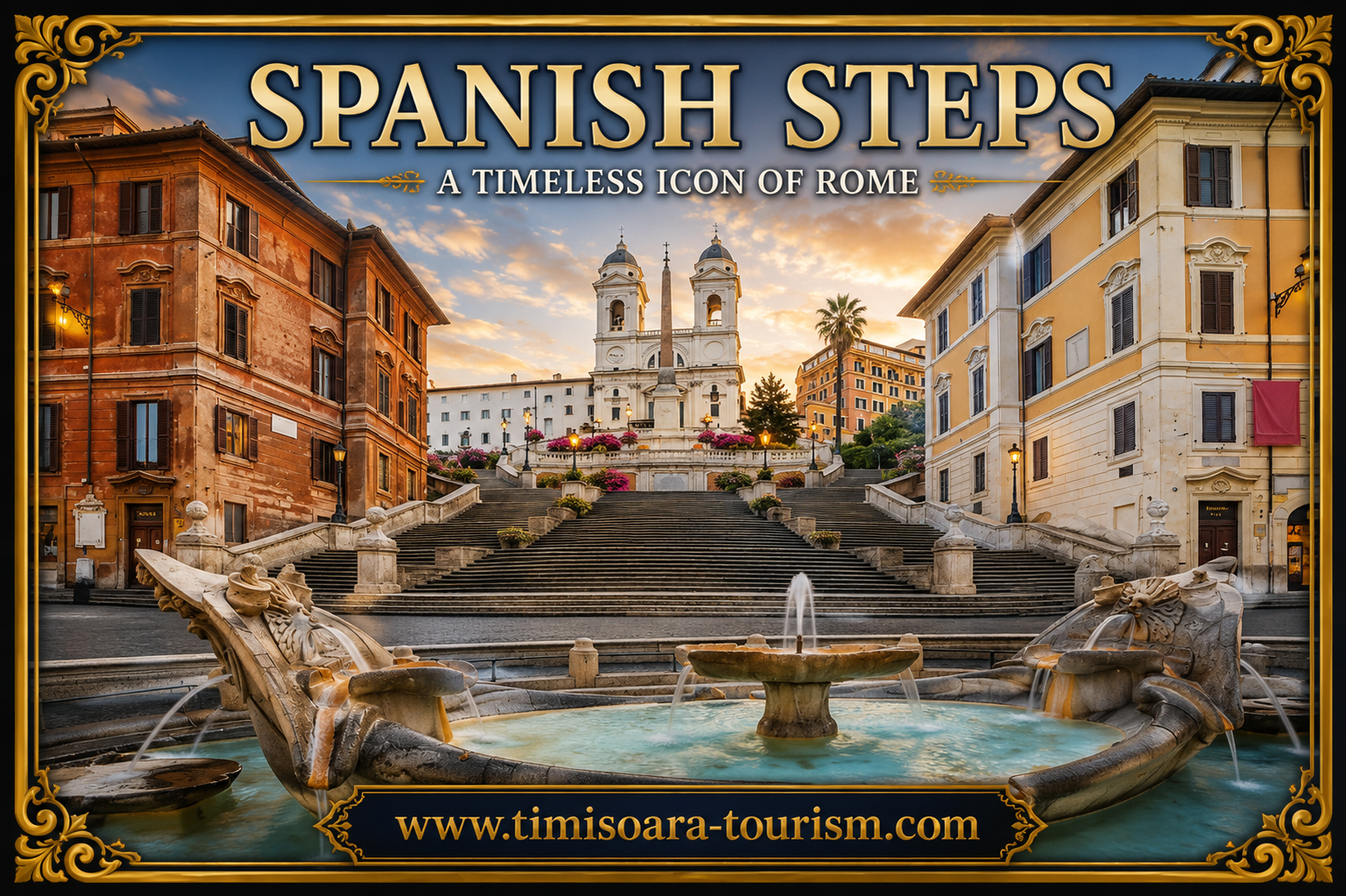
Visitors can find them between Piazza di Spagna below and Piazza Trinità dei Monti above. The Trinità dei Monti church dominates the view from the top.
The surrounding district also contains luxury boutiques, historic buildings, cafés, and cultural attractions.
Moreover, several famous Roman landmarks sit within walking distance. This location makes the Spanish Steps a popular stop for travelers exploring central Rome.
Why Are They Called the Spanish Steps?
The name can cause some confusion.
The Spanish Steps are located in Italy, and Italian architects designed the staircase. So, why do people call them “Spanish”?
The answer comes from Piazza di Spagna, or Spanish Square.
Spain established its embassy to the Holy See near the square centuries ago. That diplomatic presence eventually influenced the name used for the surrounding area.
In Italian, however, the staircase itself is commonly called Scalinata di Trinità dei Monti.
The Spanish Steps Were Built in the 18th Century
Construction of the Spanish Steps began in 1723.
Architect Francesco de Sanctis designed the monumental staircase. Alessandro Specchi also played an important role in the architectural competition connected with the project.
Workers completed the staircase in 1725.
The project created an elegant connection between the lower square and the Trinità dei Monti church above.
Before its construction, the steep slope made movement between the two areas more difficult.
The Staircase Has 135 Steps
One of the most interesting facts concerns its size.
The Spanish Steps contain 135 steps.
Their design does not follow one simple straight staircase. Instead, terraces, curves, landings, and changing widths create a dramatic visual composition.
This layout gives the monument its distinctive appearance.
As visitors climb higher, they also gain a broader view of Piazza di Spagna and the surrounding streets.
Trinità dei Monti Stands Above the Steps
The beautiful Trinità dei Monti church stands at the top of the staircase.
French King Louis XII supported the establishment of the church around the beginning of the 16th century.
Its two bell towers later became an important part of the skyline above the Spanish Steps.
Interestingly, the French connection also influenced the history of the staircase.
The steps helped create a physical and symbolic link between the church above and the Spanish diplomatic area below.
The Fontana della Barcaccia Sits at the Bottom
Visitors will notice another famous landmark before climbing the stairs.
The Fontana della Barcaccia, or Fountain of the Old Boat, stands in Piazza di Spagna.
Pietro Bernini designed the fountain during the 17th century. His famous son, Gian Lorenzo Bernini, may also have contributed to the project.
The fountain resembles a partially sunken boat.
Its unusual shape has become an essential part of the Spanish Steps landscape.
As a result, photographs of the staircase often include the Barcaccia in the foreground.
The Spanish Steps Have a Strong Literary Connection
The area has attracted artists and writers for centuries.
English Romantic poet John Keats spent the final months of his life in a house beside the Spanish Steps.
Keats died there in 1821 at only 25 years old.
Today, the building houses the Keats-Shelley House, a museum dedicated to Keats, Percy Bysshe Shelley, and other Romantic writers.
The museum preserves manuscripts, letters, books, paintings, and other historical objects.
Therefore, the Spanish Steps also hold an important place in literary history.
Flowers Became Part of Their Famous Appearance
The staircase becomes especially colorful during certain periods of the year.
Traditionally, displays of azaleas decorate the Spanish Steps during spring.
The bright flowers contrast beautifully with the pale stone staircase.
This seasonal tradition has helped create many famous photographs of the landmark.
Consequently, spring remains an especially attractive period for visitors who want to experience the Spanish Steps.
The Steps Became Famous Through Cinema
Cinema also helped introduce the Spanish Steps to international audiences.
One of the most famous examples is the 1953 film Roman Holiday, starring Audrey Hepburn and Gregory Peck.
Scenes around Rome helped turn the movie into a cinematic celebration of the city.
The Spanish Steps became closely associated with the romantic image of Rome that the film presented.
Since then, numerous films, television programs, fashion productions, and advertisements have featured the area.
Visitors Should Not Sit on the Steps
The Spanish Steps may look like a perfect place to sit and watch the crowds.
However, visitors should know an important rule.
Rome introduced stricter protections for historic monuments, including the Spanish Steps. Authorities prohibit visitors from sitting on the staircase.
Police can ask people to move and may issue penalties for violations.
The measure aims to protect the monument from damage and excessive wear.
Therefore, visitors should enjoy the staircase while continuing to move through the area.
A Major Restoration Took Place in 2016
Centuries of weather, pollution, and heavy tourism affected the staircase.
A major restoration project helped return the Spanish Steps to better condition in 2016.
Luxury fashion house Bulgari financed the restoration.
Specialists cleaned the stone and repaired damaged sections.
The project highlighted an important challenge facing Rome. The city must preserve ancient and historic monuments while millions of people continue to visit them.
Piazza di Spagna Remains One of Rome’s Busiest Areas
The Spanish Steps form only one part of the experience.
Piazza di Spagna below the staircase remains one of Rome’s most active public spaces.
Historic streets extend from the square in several directions.
Nearby Via dei Condotti has become particularly famous for luxury shopping.
Visitors can also walk toward other major attractions in central Rome.
For example, the Trevi Fountain is relatively close. Piazza del Popolo is also accessible on foot.
This convenient location makes the Spanish Steps an excellent starting point for exploring the historic center.
Why the Spanish Steps Remain a Symbol of Rome
The Spanish Steps combine architecture, history, literature, and everyday Roman life in one remarkable location.
Their elegant 18th-century design connects Piazza di Spagna with Trinità dei Monti. Meanwhile, the Barcaccia fountain adds another masterpiece to the scene.
The connection with John Keats gives the area literary importance. In addition, movies such as Roman Holiday helped transform the staircase into an international icon.
Today, visitors continue to walk across the same terraces that generations of Romans and travelers have used.
For that reason, the Spanish Steps remain more than a beautiful staircase. They represent one of the most distinctive meeting points between Rome’s history and its modern identity.