Vatican Museums: A Journey Through Centuries of Art, History, and Culture
The Vatican Museums are among the most remarkable cultural attractions in the world. Located within Vatican City, the museums preserve an extraordinary collection of art, archaeology, and historical objects gathered by the popes over many centuries.
Visitors can explore magnificent galleries, decorated papal rooms, classical sculptures, Renaissance masterpieces, and religious treasures. Most importantly, a visit also provides access to the legendary Sistine Chapel.
Therefore, the Vatican Museums are much more than a traditional museum. They offer a journey through different periods of European art, Christian history, and Western civilization.
The Fascinating History of the Vatican Museums
The history of the Vatican Museums developed over several centuries.
Their collections are closely connected with the popes who lived in and transformed the Apostolic Palace. Pope Nicholas V commissioned Fra Angelico to decorate his private chapel, while Pope Alexander VI later commissioned Pinturicchio to decorate what became known as the Borgia Apartment.
A particularly important period came during the pontificate of Pope Julius II.
His era marked the beginnings of the Vatican Museums’ famous sculpture collection in the Octagonal Court. Later popes continued expanding the collections and creating new museums.
As a result, visitors today can experience artworks and objects representing many different civilizations and historical periods.
The Sistine Chapel
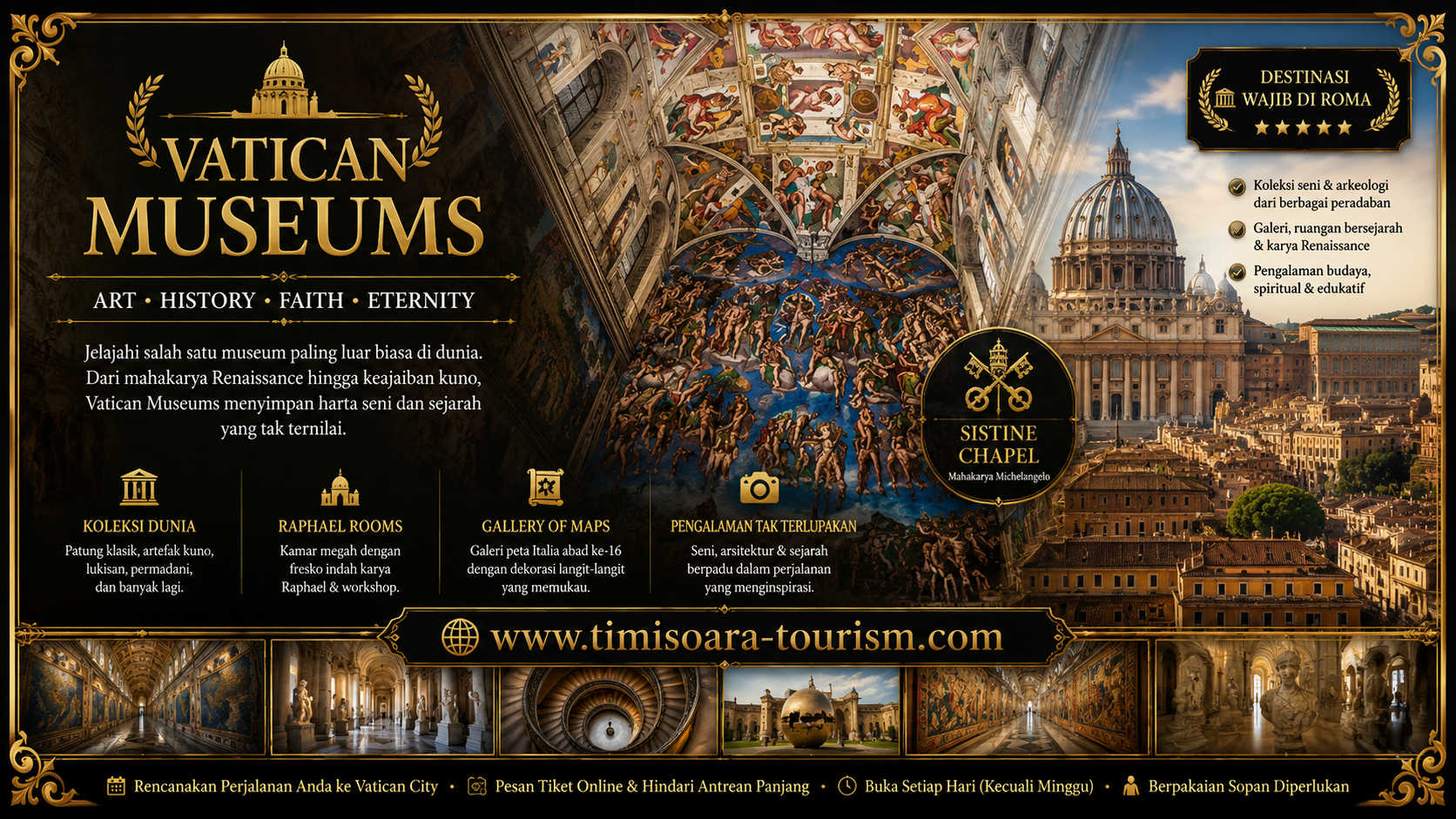
The Sistine Chapel is undoubtedly one of the most famous highlights of the Vatican Museums.
It attracts visitors from around the world because of its extraordinary Renaissance decoration and religious significance.
Michelangelo’s celebrated frescoes transformed the chapel into one of the great landmarks of Western art. The ceiling and the monumental Last Judgment have become internationally recognized masterpieces.
However, the Sistine Chapel remains a sacred space.
Visitors must remain silent inside. Photography and video recording are also prohibited in the chapel.
Discover the Raphael Rooms
Another important attraction is the Raphael Rooms.
These richly decorated rooms form part of the Apostolic Palace and are associated with Raphael and his workshop.
The rooms demonstrate the artistic ambition of Renaissance Rome. Their elaborate frescoes combine history, philosophy, theology, and classical culture.
For art lovers, they provide another major reason to explore the Vatican Museums beyond the Sistine Chapel.
Gallery of the Geographical Maps
The Gallery of the Geographical Maps offers a completely different experience.
This spectacular corridor presents historic representations of Italy. The gallery developed during the pontificate of Pope Gregory XIII and remains one of the most visually distinctive sections of the museum complex.
Its richly decorated ceiling adds to the experience.
Visitors can walk beneath elaborate Renaissance decoration while examining maps that reveal how geography was understood centuries ago.
An Extraordinary Collection of Museums
The name Vatican Museums can sometimes be misleading because visitors are not entering just one museum.
Instead, the complex contains numerous museums, galleries, chapels, and collections.
The official list includes the Gregorian Egyptian Museum, Gregorian Etruscan Museum, Pio Clementino Museum, Chiaramonti Museum, Pinacoteca, Gallery of the Tapestries, Gallery of the Geographical Maps, Raphael’s Rooms, Borgia Apartment, and Collection of Modern and Contemporary Art.
Consequently, visitors can encounter Egyptian artifacts, ancient Roman sculptures, Renaissance paintings, tapestries, maps, and modern artworks during the same visit.
This remarkable diversity makes the Vatican Museums unique.
Ancient Art and Archaeology
Ancient civilization represents another major part of the collections.
The museums preserve significant archaeological material connected with ancient Egypt, Greece, Rome, and the Etruscan world.
The Pio Clementino Museum is especially important for classical sculpture.
Meanwhile, the Gregorian Egyptian and Gregorian Etruscan museums allow visitors to explore cultures that existed long before Renaissance Rome.
Therefore, the museum experience stretches across thousands of years.
More Than Renaissance Art
Although Michelangelo and Raphael attract enormous attention, the Vatican Museums extend far beyond Renaissance masterpieces.
The complex also contains the Collection of Modern and Contemporary Art.
This creates an interesting contrast between ancient traditions and relatively recent artistic movements.
Visitors can move from classical antiquity through medieval and Renaissance culture before discovering modern artistic expression.
Few museum complexes offer such an extensive historical journey in a single destination.
Visiting the Vatican Museums
Planning ahead can make a visit much easier.
The museums are currently open Monday through Saturday from 8:00 a.m. until 8:00 p.m., with final admission at 6:00 p.m. They also open on the last Sunday of most months from 9:00 a.m. until 2:00 p.m., with final admission at 12:30 p.m. Specific holiday closures apply.