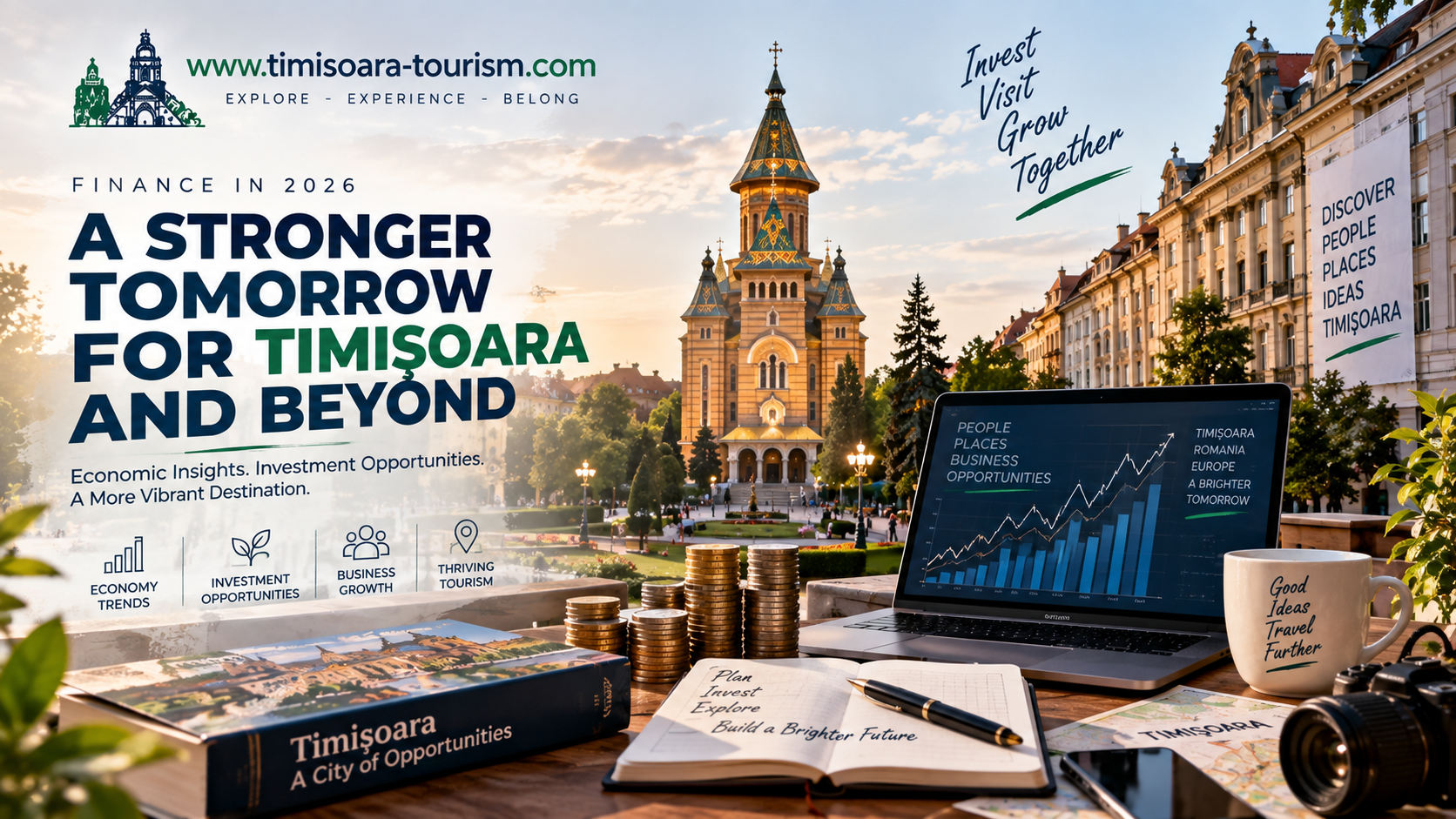
Finance is becoming an increasingly important topic for businesses and households across Romania.
In 2026, the country faces a complicated economic environment. Inflation remains high, public finances are under pressure, while investment and exports continue to provide important support.
For readers of www.timisoara-tourism.com, understanding these financial trends can also help explain how Romania’s business and tourism sectors are changing.
Romania Faces a Challenging Financial Environment
Romania’s economy is moving through a period of adjustment.
The European Commission forecasts real GDP growth of only 0.1% in 2026. However, growth could recover to 2.3% in 2027 as inflation falls and financing conditions improve.
This creates a mixed picture.
Businesses need to remain careful with spending. At the same time, investment opportunities remain available.
Inflation Remains a Major Concern
Inflation continues to affect household budgets.
Eurostat reported that Romania recorded an annual inflation rate of 8.2% in July 2026, the highest rate among EU member states at that time.
Higher prices can influence almost every part of the economy.
Consumers may reduce discretionary spending. Businesses may also face higher costs for energy, transportation, wages, and materials.
Tourism can feel these effects as well.
Travelers may become more selective when choosing accommodation, restaurants, and experiences.
Public Finance Is Under Pressure
Romania is also working to reduce its government deficit.
The European Commission expects the general government deficit to decline from 7.9% of GDP in 2025 to 6.2% in 2026. However, public debt is projected to rise to around 61.6% of GDP in 2026.
Fiscal consolidation can create short-term pressure.
Government spending becomes more controlled. Taxes and other fiscal measures can also affect businesses and consumers.
However, stronger fiscal management can support greater financial stability over the longer term.
Investment Remains Important
Investment is one of the key factors supporting Romania’s economy.
EU-funded projects continue to contribute to economic activity. Public infrastructure investment is also expected to increase in 2026.
This can create opportunities for companies involved in construction, technology, transportation, hospitality, and professional services.
Cities with strong business ecosystems can benefit from this activity.
Timișoara is one of the Romanian cities where business, technology, tourism, and investment can intersect.
Finance and Tourism Are Connected
Financial conditions can directly influence tourism.
When households have less disposable income, they may reduce travel spending. Businesses can also reconsider budgets for conferences, corporate travel, and events.
On the other hand, a strong local business environment can support tourism.
New companies bring employees, visitors, events, and business activity.
That creates demand for hotels, restaurants, transportation, and local experiences.
Businesses Need Better Financial Planning
The current environment makes financial planning more important.
Companies need to monitor costs carefully.
They also need to understand cash flow, financing conditions, and customer demand.
Small businesses can start with simple measures.
They can review unnecessary expenses. They can negotiate with suppliers. They can also invest in digital tools that improve productivity.
Good financial management does not always mean spending less.
It means spending more intelligently.
Digital Finance Is Changing Business
Technology continues to reshape financial services.
Digital banking, online payments, automated accounting, and financial management platforms can make business operations faster.
E-commerce also connects finance with everyday transactions.
A customer can discover a product online, pay digitally, and receive it without visiting a physical store.
The same concept applies to tourism.
Visitors can research destinations, book accommodation, purchase tickets, and pay for experiences through digital platforms.
Financial Stability Can Create New Opportunities
Romania’s current economic situation presents challenges.
However, challenges can also encourage businesses to become more efficient.
Companies that control costs, understand customers, and use technology effectively can become more resilient.
For tourism businesses, this means creating experiences that offer clear value.
For investors, it means carefully evaluating risks and opportunities.
For consumers, it means making smarter financial decisions.
Looking Ahead to 2027
The outlook could improve if inflation continues to decline.
The European Commission expects Romanian economic growth to accelerate to 2.3% in 2027, supported by better financing conditions and stronger consumption.
However, risks remain.
Energy prices, fiscal policy, geopolitical developments, and investor confidence can all influence the economic outlook.
Romania therefore enters the next phase with both challenges and opportunities.
Finance in 2026 is not only about money and markets. It is about