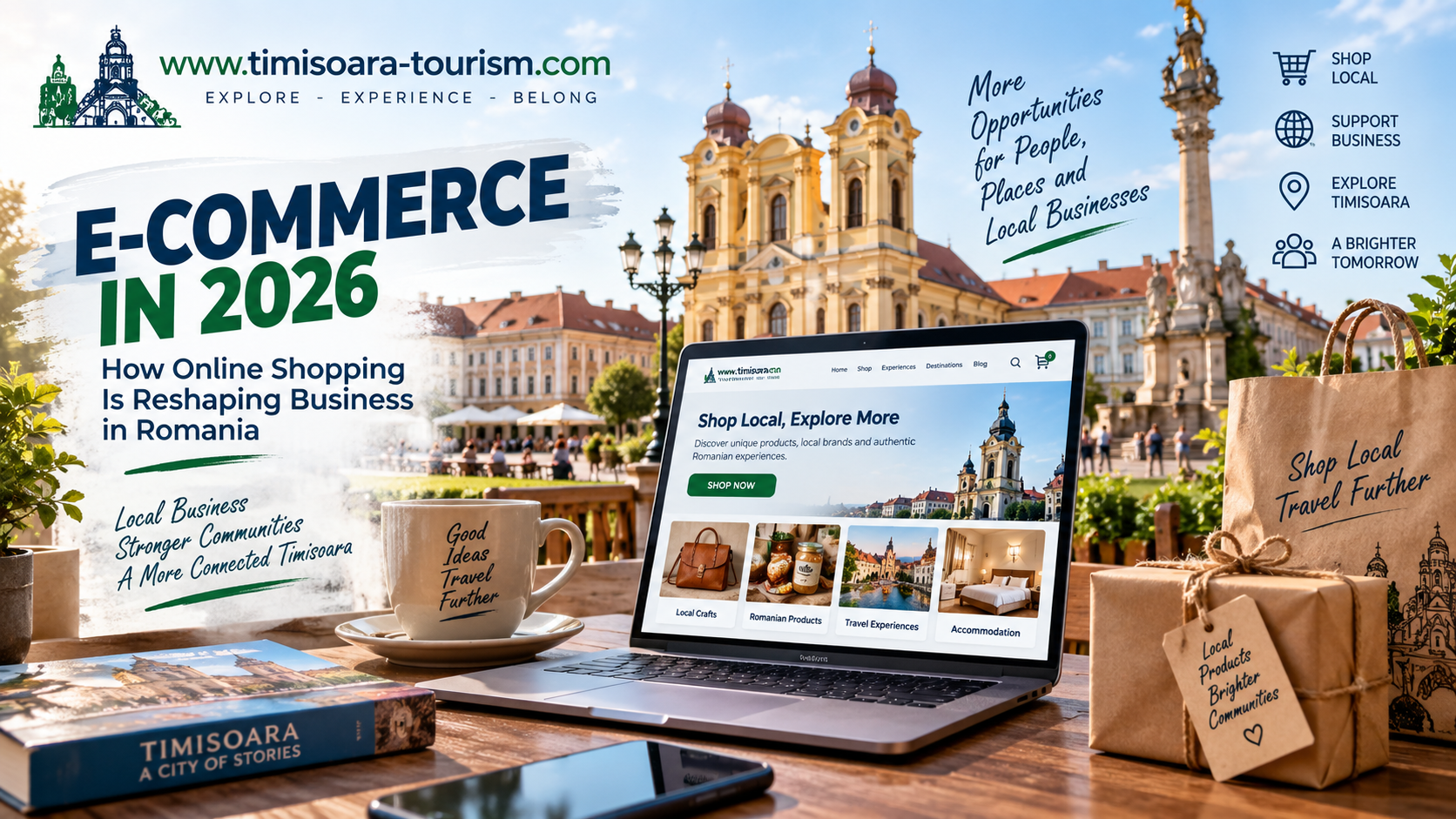
E-commerce is changing the way people discover, compare, and buy products and services.
For Romanian businesses, the shift creates new opportunities. Small brands can reach customers beyond their local area. Traditional companies can also use digital channels to build stronger relationships with consumers.
For a business and tourism-focused platform such as Timisoara-Tourism.com, e-commerce is also an important topic. The digital economy connects local businesses, tourism services, experiences, and customers in new ways.
Romania’s Online Shopping Market Keeps Growing
Online shopping has become a normal part of everyday life.
Eurostat reported that 78% of people in the European Union bought or ordered goods or services online in 2025. Romania has also experienced strong long-term growth. Between 2015 and 2025, the share of Romanian internet users buying online increased by 46 percentage points.
This change creates a larger digital market for Romanian businesses.
Customers can now discover products from their phones. They can compare prices, read reviews, and place orders without visiting a physical store.
E-Commerce Gives Small Businesses More Reach
A small business no longer needs a large physical network to find customers.
An online store can reach buyers across Romania. With the right logistics and marketing strategy, businesses can also target customers in other European markets.
This creates opportunities for local brands in areas such as fashion, food, crafts, beauty, tourism, and home products.
Digital platforms can therefore help local businesses compete in a much larger market.
Tourism Can Benefit from E-Commerce
E-commerce is not limited to physical products.
Travelers increasingly use websites and apps to purchase accommodation, transportation, event tickets, and other services. Eurostat data shows that online shoppers purchased accommodation, transport services, event tickets, and restaurant deliveries through digital channels.
This creates an opportunity for destinations such as Timisoara.
Hotels, restaurants, tour operators, cultural venues, and local experience providers can use digital platforms to reach visitors before they arrive.
The customer journey can start online and continue in the city.
Mobile Shopping Is Becoming Essential
Consumers want convenience.
They expect websites to load quickly. They also want simple navigation and easy payment options.
A complicated checkout process can cause customers to abandon their purchases.
Therefore, businesses need to make the entire buying journey simple.
Product information should be clear. Prices should be visible. Delivery information should be easy to understand.
Trust also matters.
Logistics Can Decide Customer Satisfaction
A successful online store needs more than attractive products.
Delivery also plays an important role.
Eurostat found that 20% of online shoppers in 2025 experienced slower delivery than indicated. Other problems included websites that were difficult to use and products that arrived damaged or incorrect.
For businesses, this is an important lesson.
A good e-commerce strategy must include reliable logistics, accurate product information, and responsive customer service.
Romanian Businesses Face Strong Competition
The Romanian e-commerce market continues to develop, but competition is becoming stronger.
A 2026 analysis from MerchantPro reported that Romania’s online market was expected to exceed €8.5 billion in 2026. The same analysis found that online sales value increased during the first half of the year, while the number of orders remained relatively stable.
Businesses therefore need to focus on more than price.
Brand identity, product quality, customer experience, and fast service can become important competitive advantages.
Personalization Can Build Customer Loyalty
Customers do not want to see random offers.
They want relevant recommendations.
Businesses can use customer data to understand shopping behavior. They can then create more useful product suggestions and targeted campaigns.
However, businesses must also respect privacy and use customer data responsibly.
Trust remains one of the most valuable assets in digital commerce.
The Future of E-Commerce Is More Connected
E-commerce will continue to connect different parts of the economy.
Retail can connect with social media. Tourism can connect with digital booking. Local products can reach international customers. Physical stores can work together with online platforms.
For Romanian businesses, this creates a valuable opportunity.
The companies that understand their customers and build a smooth digital experience will have a stronger position in the future.
E-commerce is no longer just another sales channel. It is becoming an important part of how businesses build brands, reach customers, and compete in the modern economy.