Pantheon in Rome: The Ancient Wonder That Has Survived for Nearly 2,000 Years
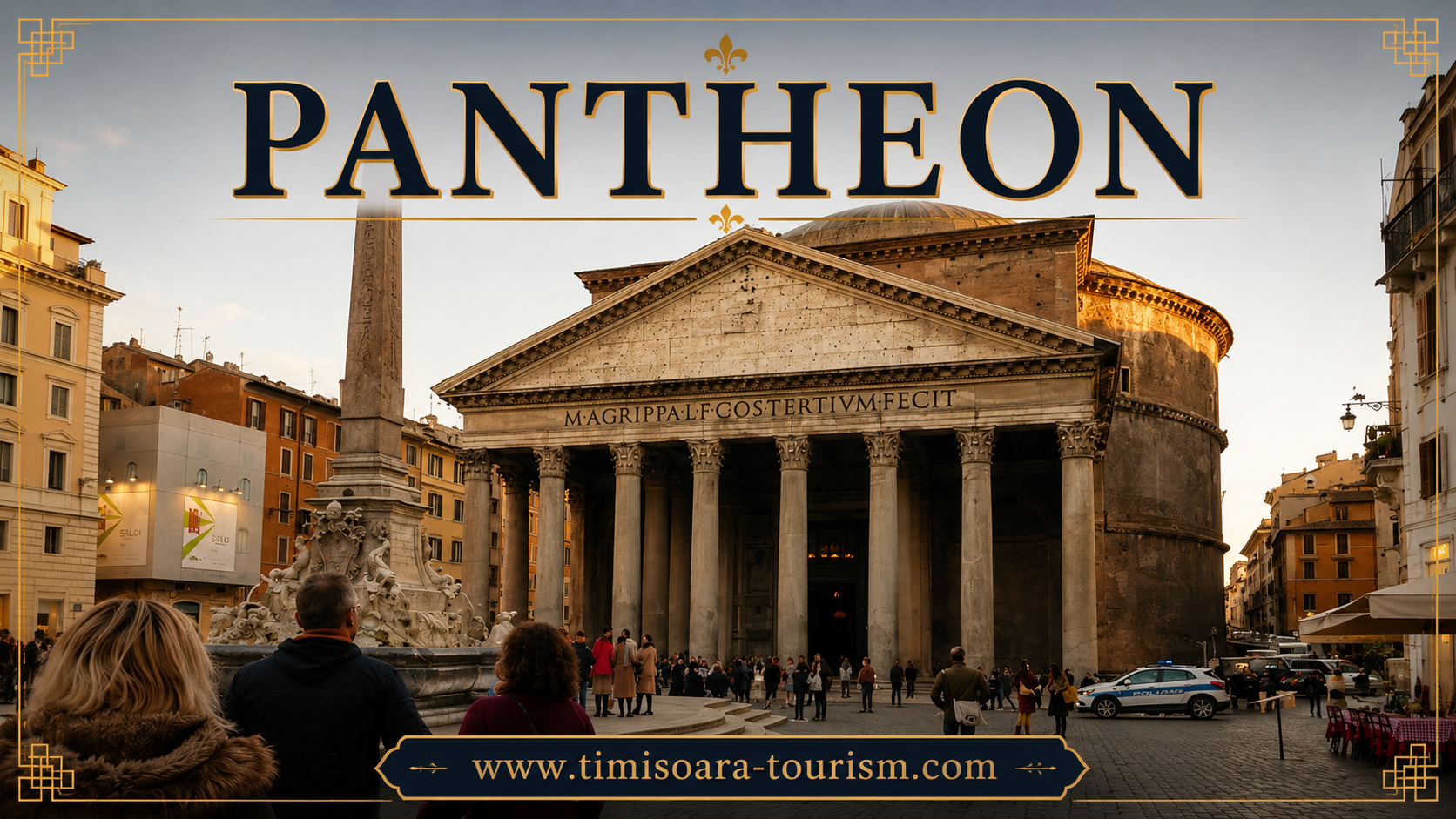
Rome, Italy – The Pantheon in Rome is one of the most remarkable monuments from the ancient Roman world. Located in the historic center of Rome, the building attracts visitors with its enormous dome, classical columns, and extraordinary history.
Although almost two thousand years have passed, much of the structure remains standing. Therefore, the Pantheon offers a rare opportunity to experience Roman architecture on an impressive scale.
Today, the monument is also an active Catholic church. Its official name is the Basilica of Santa Maria ad Martyres.
What Is the Pantheon?
The word Pantheon comes from Greek roots associated with “all gods.” However, historians continue to debate the exact original religious function of the Roman building.
An earlier Pantheon was constructed during the reign of Augustus by Marcus Agrippa. That structure was later damaged.
The building visitors see today dates mainly from the reign of Emperor Hadrian in the second century AD.
Interestingly, the famous inscription on the front still honors Agrippa. This connection helps preserve the memory of the earlier monument.
The Pantheon Has an Extraordinary Dome
The Pantheon in Rome is especially famous for its huge concrete dome.
For centuries, architects and engineers have studied its design. The dome remains the world’s largest unreinforced concrete dome.
Moreover, its interior creates a remarkable sense of balance. The height from the floor to the top of the dome is approximately equal to the interior diameter.
As a result, the interior can be imagined as a giant sphere fitting within the building.
The Oculus Brings the Sky Inside
At the center of the dome sits another famous feature: the oculus.
This circular opening measures about nine meters across. It provides the main source of natural light inside the rotunda.
However, the oculus has no glass covering.
Therefore, rain can enter the Pantheon during wet weather. The floor was designed with drainage holes that help remove the water.
As sunlight moves during the day, the beam from the oculus also moves across the interior. Consequently, light becomes part of the architectural experience.
Why Has the Pantheon Survived?
Many ancient Roman buildings disappeared or fell into ruins. The Pantheon had a different history.
One important turning point came in the seventh century. Emperor Phocas gave the building to Pope Boniface IV.
In 609, the Pantheon was consecrated as a Christian church.
Its continued religious use helped protect the structure over the following centuries. Although parts of the monument changed, the main rotunda and dome survived remarkably well.
Raphael Is Buried Inside the Pantheon
The monument also became the resting place of several important figures.
Perhaps the most famous is Raphael, one of the great painters and architects of the Italian Renaissance. He died in Rome in 1520 and was buried inside the Pantheon.
Italian kings Victor Emmanuel II and Umberto I are also buried there.
Therefore, the building connects several periods of Italian history. Ancient Rome, Christianity, the Renaissance, and modern Italy all meet under the same dome.
Architecture That Influenced the World
The Pantheon in Rome has influenced architecture far beyond Italy.
Its monumental portico uses large Corinthian columns. Behind them, the circular rotunda creates a dramatic contrast with the traditional rectangular entrance.
Meanwhile, the dome demonstrates the engineering abilities of ancient Roman builders.
Architects later studied these elements and adapted them for churches, government buildings, museums, universities, and memorials.
For that reason, visitors may recognize Pantheon-inspired designs in buildings around the world.
The Pantheon Remains a Major Rome Attraction
Today, the Pantheon remains one of Rome’s most important historic landmarks.
Visitors can walk beneath the same dome that has stood for nearly two millennia. They can also observe ancient engineering while exploring a building that remains connected to modern religious life.
Furthermore, its location makes it easy to include during a walking tour through central Rome.
The Pantheon in Rome is more than an ancient monument. It is a surviving bridge between different chapters of European history and a powerful example of how Roman architecture continues to influence the modern world.